The Garden Route
A South African road trip, wildlife and a little one-liner humour.
A Must for any Travel Enthusiast
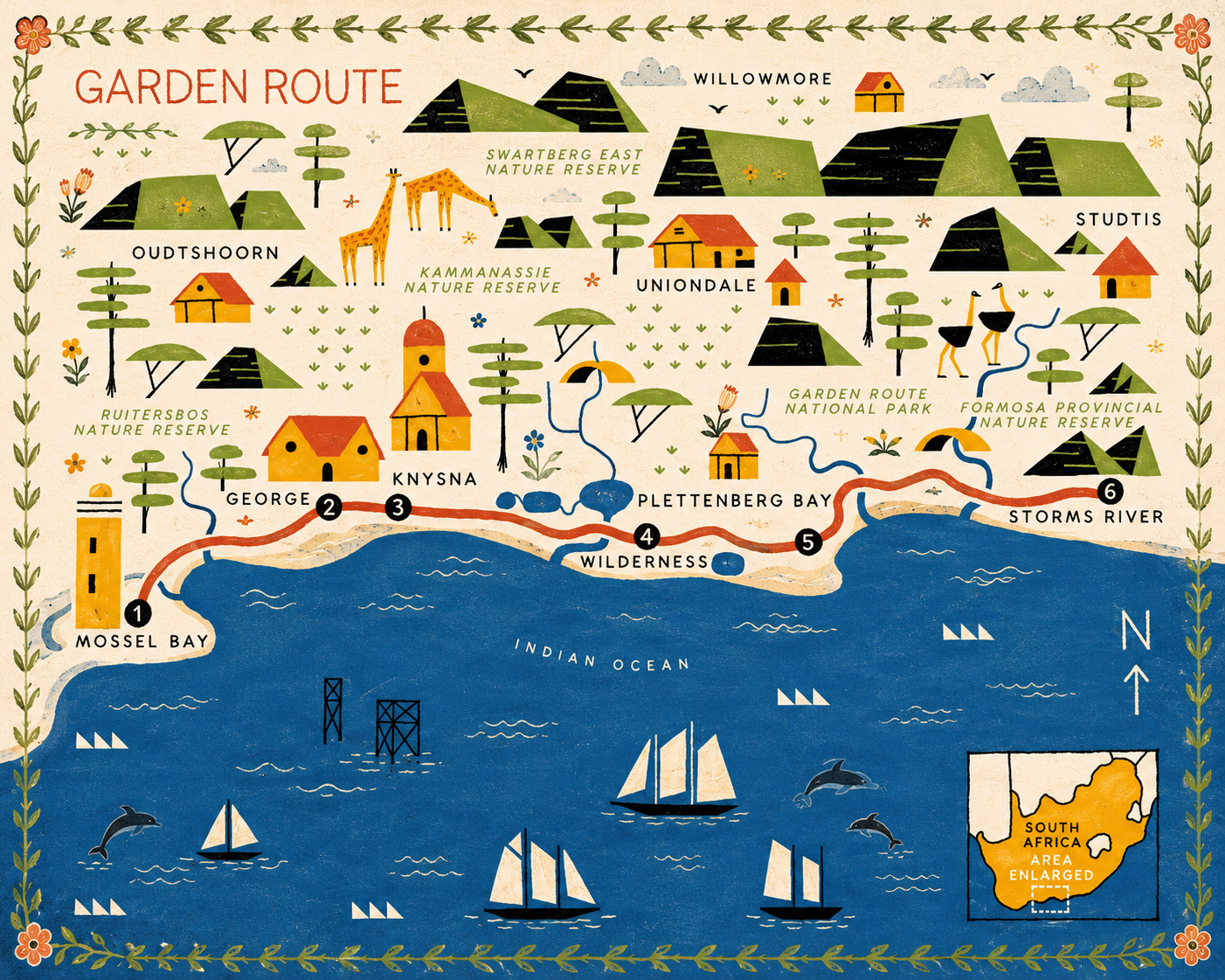
If you’re looking for a destination that blends dramatic coastlines, lush forests, wildlife, and laid-back towns, South Africa’s Garden Route is hard to beat. Stretching roughly 300 km along the southern coast—from Mossel Bay to Storms River—it’s one of the country’s most iconic road trips.
What makes it special?
The Garden Route gets its name from its green, almost tropical vegetation—quite a contrast to other parts of South Africa. You’ll find:
- Dense indigenous forests
- Lagoons and rivers
- Rugged cliffs and golden beaches
- Mountain backdrops everywhere
It’s perfect for people who want variety without traveling huge distances.
Do you love beautiful places? Then you should visit the Garden Route in South Africa. It is a famous road trip along the sea. It is about 300 kilometers long.
Why is it special?
The Garden Route is very green and beautiful. It looks like a big garden! On this trip, you can see:
Big trees and green forests
Rivers and blue lakes
Large rocks and yellow beaches
Beautiful mountains
It is the perfect trip if you want to see many different things in a short time.
Key Stops
Key stops along the way
A historic coastal town where the route begins. Great for whale watching (in season) and maritime history.
True to its name—quiet, scenic, and full of lakes and hiking trails. Ideal if you want a slower pace.
Probably the most famous stop. Known for its lagoon and the dramatic Knysna Heads. Also famous for oysters.
Beachy, relaxed, and slightly more upscale. You might spot dolphins or even whales offshore.
A highlight for many visitors—think suspension bridges, dense forest, and adventure activities like ziplining and kayaking.
This is a historic town by the sea where the trip starts. It is a great place to see big whales in the water and learn about history.
This town is very quiet and beautiful. It has many lakes and nice paths for walking. It is perfect if you want to relax.
This is the most famous stop. It is famous for a beautiful lagoon (a quiet lake next to the sea) and big rocks. People love to eat fresh seafood here.
A very relaxed town with beautiful beaches. If you look at the sea, you can often see dolphins and whales!
Many people love this place the most. It has big green forests, exciting high bridges to walk across, and fun activities like kayaking on the river.
Wildlife and Nature
Wildlife & nature
You don’t need a full safari to see wildlife here:
Elephants (at nearby reserves)
Dolphins and whales (seasonal)
Birdlife in forests and wetlands
Nature is really the main attraction—it’s less about big game, more about landscapes and outdoor activities.
Things to Do
What to do:
- Drive the coastal roads (the journey is the experience)
- Hike in forests and national parks
- Try adventure sports (bungee jumping, kayaking, canopy tours)
- Relax on beaches or explore small towns
- Visit local markets, wineries, and seafood spots
Some videos to watch
The Extraordinary Miss Sunshine
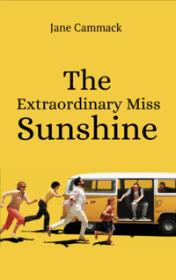
Not everyone has a happy childhood, and school is not always a carefree time. When eleven-year-old Alice May moves to a new city with her parents, she is excited but also anxious. Unfortunately, things go wrong when she becomes the target of bullying at her new school.
Alice decides to keep this a secret from her parents. She worries that if her father speaks to the teachers, the situation will only get worse. She soon realizes she is not alone. A group of teenagers at the school targets anyone who is clever or always does their homework, believing that only the "bad kids" are cool.
But one day, everything changes. A new music teacher named Miss Sunshine arrives. She is completely different from the other teachers, and her creative methods are about to change Alice's world forever.
📚ePub: download
🎧Audio: download
Same as the movie?
Many people see the title of the book and immediately think of the famous Hollywood movie, Little Miss Sunshine. They wonder: "Is the movie based on this book?"
The short answer is no! In fact, they are completely different stories that just happen to share a similar name. If you are confused, don't worry—you are not the only one.
So, if you search for the book online, be careful not to confuse it with the movie! In our book, "Miss Sunshine" isn't a beauty competition—she is a wonderful teacher who is about to change Alice's life.
To help you see how different they are, look at this quick comparison table:
Jokes - The famous 'ONE-LINER'
- I want to die peacefully in my sleep, like my grandfather.. Not screaming and yelling like the passengers in his car.
- Politicians and diapers have one thing in common. They should both be changed regularly, and for the same reason.
- The early bird might get the worm, but the second mouse gets the cheese. (expression)
- Evening news is where they begin with 'Good evening', and then proceed to tell you why it isn't.
- You do not need a parachute to skydive. You only need a parachute to skydive twice.
- It's not the fall that kills you; it's the sudden stop at the end.
- Always borrow money from a pessimist. He won't expect it back.
- You are such a good friend that if we were on a sinking ship together and there was only one life jacket... I'd miss you heaps and think of you often.
- My opinions may have changed, but not the fact that I am right.
- I intend to live forever. So far, so good.
- Some cause happiness wherever they go. Others whenever they go.
- My psychiatrist told me I was crazy and I said I want a second opinion. He said okay, you're ugly too.
- Hospitality: making your guests feel like they're at home, even if you wish they were.
- Worrying works! 90% of the things I worry about never happen.
- I always take life with a grain of salt, …plus a slice of lemon, …and a shot of tequila. (expression)
- A little boy asked his father, "Daddy, how much does it cost to get married?" Father replied, "I don't know son, I'm still paying."
- I used to be indecisive. Now I'm not sure.
- You're never too old to learn something stupid.
Understanding Acidic Humor in English
The one-liners you just read are examples of acidic humor—also called sarcastic, dry, or dark comedy. This type of humor is very common in English-speaking cultures, especially in the UK, Australia, and the US.
So, what makes it "acidic"?
1. It's sharp and bitter. Like acid, it stings a little. The joke often makes fun of serious topics—like death, politics, or stupidity—in a cold, unemotional way.
2. It says the opposite of what is expected. For example, when the speaker says, "I'd miss you heaps" instead of giving you the life jacket, they are pretending to be kind while actually being brutally selfish. The humor comes from the surprise.
3. It uses understatement. Instead of shouting or exaggerating, acidic humor stays calm and deadpan. The speaker sounds serious, but the content is ridiculous or cruel.
4. It's not for everyone. This humor can seem rude or mean if you take it literally. But in English culture, it is often a sign of intelligence and closeness—friends tease each other this way to show affection.
👉 "Is this true?" (often yes, but exaggerated)
👉 "Is this kind?" (usually no, but that's the point!)
👉 "Is it meant to hurt?" (rarely—it's mostly for laughs)
The key is not to take it personally. Think of it as verbal "play-fighting." Once you understand the tone, these jokes become much funnier! 😄